WELCOME TO OLD LEGENDS.JPG.opt424x417o0,0s424x417.JPG) 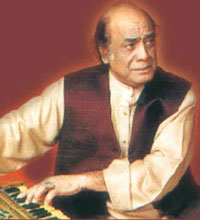 MEHDI HASSAN SINGER BIOGRAPHY Mehdi Hassan was born in the village of Luna, Jaipur in Rajasthan, India in 1927. He was the 16th generation of hereditary musicians hailing from the Kalawant. Kala means "Art" and Kalawant means "artist". He received his musical training under his father, Ustad Azeem Khan and his uncle Ustad Ismail Khan. They instructed him in classical music and voice production within the framework of classical forms of Thumri, Dhrupad, Khayal and Dadra, from the young age of eight. Mehdi Hassan started to perform with his elder brother Ghulam Qadir Khan as Darbari Gawayya and the first concert of Dhrupad and Kheyal at the darbar of Maharaja of Barodah. After the independence, 20 years old Mehdi Hassan and his family migrated to Pakistan and settled in Cheecha Watni, district Sahiwal. He sang in few musical functions in Lahore but could not achieve any success. He also worked at Pancholi film studio Lahore and began working in a bicycle shop and later became a car and diesel tractor mechanic. Despite the hardships, his passion for music didn't wither and he kept up the daily routine of practice. Mehdi Hassan got chance to sing Ghazals and songs at Radio Pakistan Karachi in 1952, where his uncle Ismael Khan was established as a music director. He also got chance to sing for some Karachi made movies but failed to make any progress. 1962 was a lucky year for Mehdi Hassan when his three songs were hit. His all time hit Ghazal Gullon mein rang bharay... in film Farangi (1964) gave him breakthrough as playback singer. His peak period was in the 1970s and after the downfall of Urdu movies in the 1980s, he was ignored by the music directors. Since he mostly sang in private functions. Later due to severity of his illness he completely departed from music 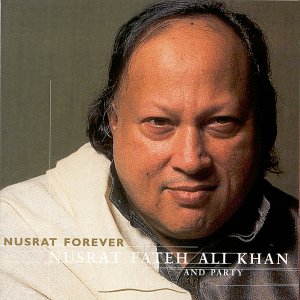 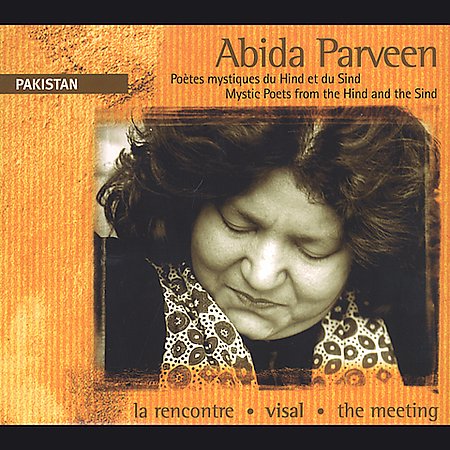 ABIDA PARVEEN Abida Parveen is a rarity in the world of Sufi music, a female lead performer. She is the daughter of prominent Pakistani vocalist Ustad Ghulam Haider, who (somewhat bravely) ignored convention and allowed her to study under him, and she also accompanied him to various religious performances. After a time developing her abilities, she married Ustad Hussein Sheikh, an influential producer from Radio Pakistan, who also helped her to further her career. More time was spent in study, this time with the great Salamat Ali Khan. A number of albums, compilation appearances, and various world tours have followed, making her by far the most successful Sufi female performer, and one of the more notable performers of the form in general. ~ Adam Greenberg, Rovi 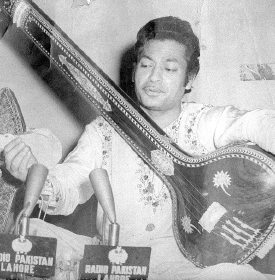 Translate This Page
 Shamim Ara Actress BiographyShamim Ara is a Pakistani film actress and producer. She was a famous
film actress of the 1950s till the early 1970s. She is most famous for
her lead in the first ever Pakistani color motion picture "Naela". She
currently resides in Lahore, Pakistan. Madam Noor Jehan as Surayya, Anarkali's younger
sister. For the next to years, Shamim Ara went on to star in a few film
but, none were a major success at the box office. However, in 1960, a
side role in the film "Saheli" starring the late Nayyar Sultana is what
truly advanced her career. By now, Shamim Ara had become a household
name. Also, the pciturization of the song "Mujh se pehli si Muhabbat",
one of Madam Noor Jehan's famous songs in the film "Qaidi" (1962) on her
really skyrocketed her career. People had begun mimicking her speech,
her make-up and her hairstyle. Her fame and impeccable acting skills
landed her the title character of "Naila" (1965), the first color film
produced in Pakistan. She went on to star in numerous films over the
next few years. Her acting career came to a halt in the early 1970's
but, that did not stop her from being a part of the Pakistani film
industry as, she went on to produce and direct films. However, none of
those films reached the level of success Shamim Ara had at the height of
her acting career. NUSRAT FATHE ALI KAHN Early life and careerNusrat Fateh Ali Khan was born on October 13, 1948 in the city of Faisalabad, Pakistan into a Punjabi family. He was the fifth child and first son of Fateh Ali Khan, a musicologist, vocalist, instrumentalist, and Qawwal. Khan's family, which included four older sisters and a younger brother, Farrukh Fateh Ali Khan, grew up in central Lyallpur. In 1979, Khan married his first cousin, Naheed (the daughter of Fateh Ali Khan's brother, Salamat Ali Khan); they had one daughter, Nida.[2] Khan began by learning to play tabla alongside his father before progressing to learn Raag Vidya and Bol Bandish. He then went on to learn to sing within the classical framework of khayal. Khan's training with his father was cut short when his father died in 1964, leaving Khan's paternal uncles, Mubarak Ali Khan and Salamat Ali Khan, to complete his training. His first performance was at a traditional graveside ceremony for his father, known as chehlum, which took place forty days after his father's death. In 1971, after the death of Mubarak Ali Khan, Nusrat became the official leader of the family Qawwali party and the party became known as Nusrat Fateh Ali Khan, Mujahid Mubarak Ali Khan & Party. Khan's first public performance as the leader of the Qawwali party was at a studio recording broadcast as part of an annual music festival organised by Radio Pakistan, known as Jashn-e-Baharan. Khan sang mainly in Urdu and Punjabi and occasionally in Persian, Brajbhasha and Hindi. His first major hit in Pakistan was the song Haq Ali Ali, which was performed in a traditional style and with traditional instrumentation. The song featured restrained use of Nusrat's sargam improvisations. Early in his career, Khan was signed up by Oriental Star Agencies [OSA] of Birmingham UK to their Star Cassette Label. OSA sponsored regular concert tours by Nusrat to the U.K. from the early '80s onwards, and released much of this live material on cassette, CD, videotape and DVD. [edit] Later careerKhan teamed with Peter Gabriel on the soundtrack to The Last Temptation of Christ in 1985, with Canadian musician Michael Brook on the albums Mustt Mustt (1990) and Night Song (1996)[3], and with Pearl Jam lead singer Eddie Vedder in 1995 on two songs for the soundtrack to Dead Man Walking. He also contributed to the soundtrack of Natural Born Killers. Peter Gabriel's Real World label later released five albums of Nusrat's traditional Qawwali, together with some of his experimental work which included the albums Mustt Mustt and Star Rise. Nusrat provided vocals for The Prayer Cycle, which was put together by Jonathan Elias, but died before the vocals could be completed. Alanis Morissette was brought in to sing with his unfinished vocals. Nusrat also collabrated with Michael Brook to create music for the song 'Sweet Pain' used in the movie Any Given Sunday. He also performed traditional Qawwali before international audiences at several WOMAD world music festivals and the single Dam Mast Qalandar was remixed by electronic trip hop group Massive Attack in 1998. His album Intoxicated Spirit was nominated for a Grammy award in 1997 for best traditional folk album. Khan contributed songs to, and performed in, several Pakistani films. Shortly before his death, he recorded a song each for two Bollywood films, Aur Pyaar Ho Gaya (in which he also sang the song onscreen) and Kachche Dhaage. He sang the title song of the film, Dhadkan. He also sang Saya bhi saath jab chhod jaye for Sunny Deol's movie, Dillagi. The song was released only in 1999, two years after Nusrat's death. Khan contributed the song "Gurus of Peace" to the album Vande Mataram, composed by A.R. Rahman, and released to celebrate the 50th anniversary of India's independence. Rahman, who was a big fan of Khan could not do further songs with him. As a tribute, Rahman later released an album titled Gurus of Peace, which featured "Allah Hoo" by Nusrat. Rahman's 2007 song "Tere Bina" was also done as a tribute to Nusrat.[4] According to the Guinness Book of World Records, Nusrat Fateh Ali Khan holds the world record for the largest recorded output by a Qawwali artist—a total of 125 albums as of 2001.[citation needed] [edit] DeathKhan was taken ill with kidney and liver failure on August 11, 1997 in London, England while on the way to Los Angeles in order to receive a kidney transplant. He died of a sudden cardiac arrest at Cromwell Hospital, London, on Saturday, August 16, 1997, aged 48.[5][unreliable source?] His body was returned to Faisalabad, Pakistan and his funeral was attended by the public. After his death, the song "Solemn Prayer", on which Nusrat provided vocals, was used on the Peter Gabriel song 'Signal to Noise' (on the album Up), and on the soundtrack to the Martin Scorsese film Gangs of New York.
ADMIN:HIMAYAT ALI/BASIT ALI EMAIL: DAZZLINGSTAR42@HOTMAIL.COM(YAHOO.HOTMAIL.GMAIL) BABU_JEE2008@YAHOO.COM |
||||

